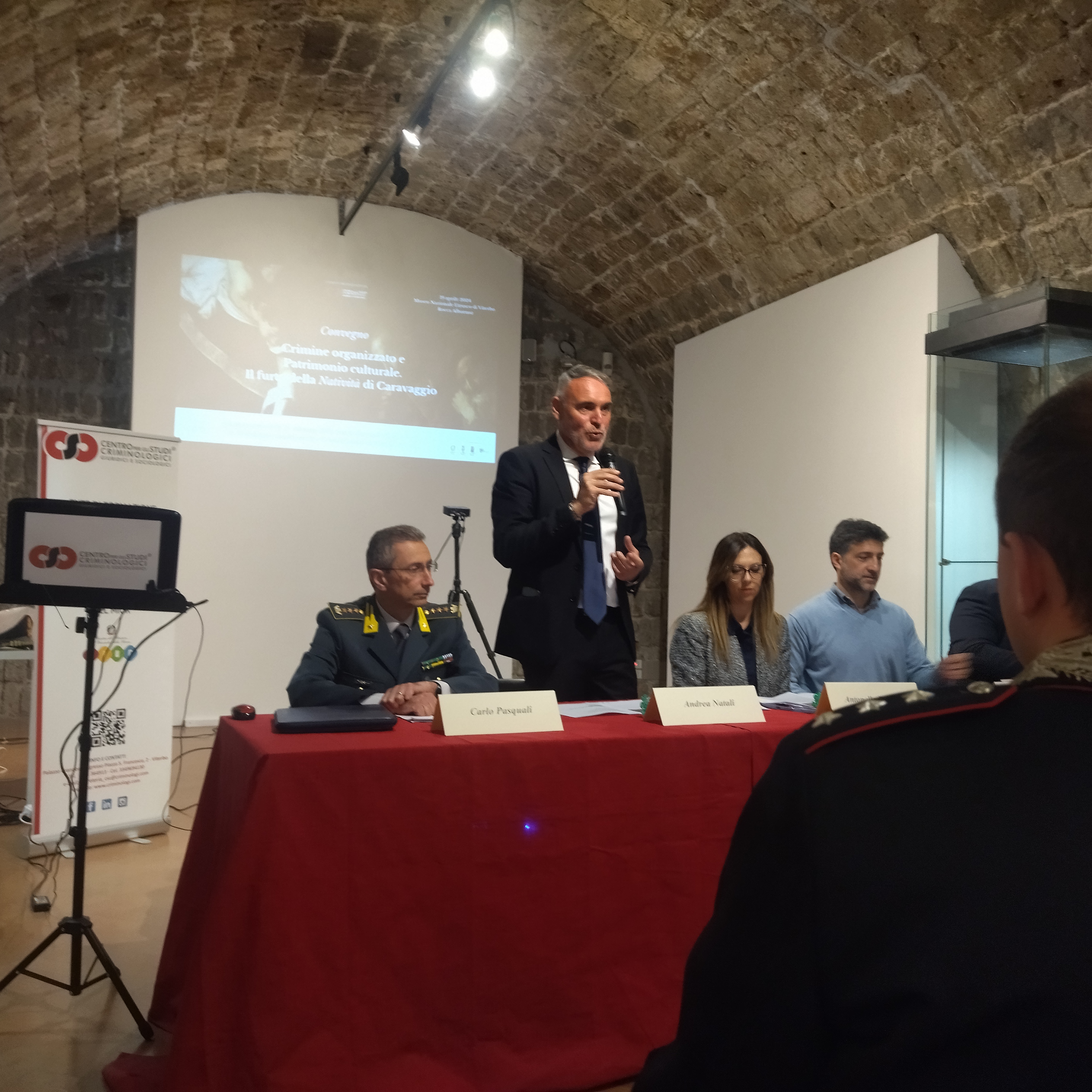
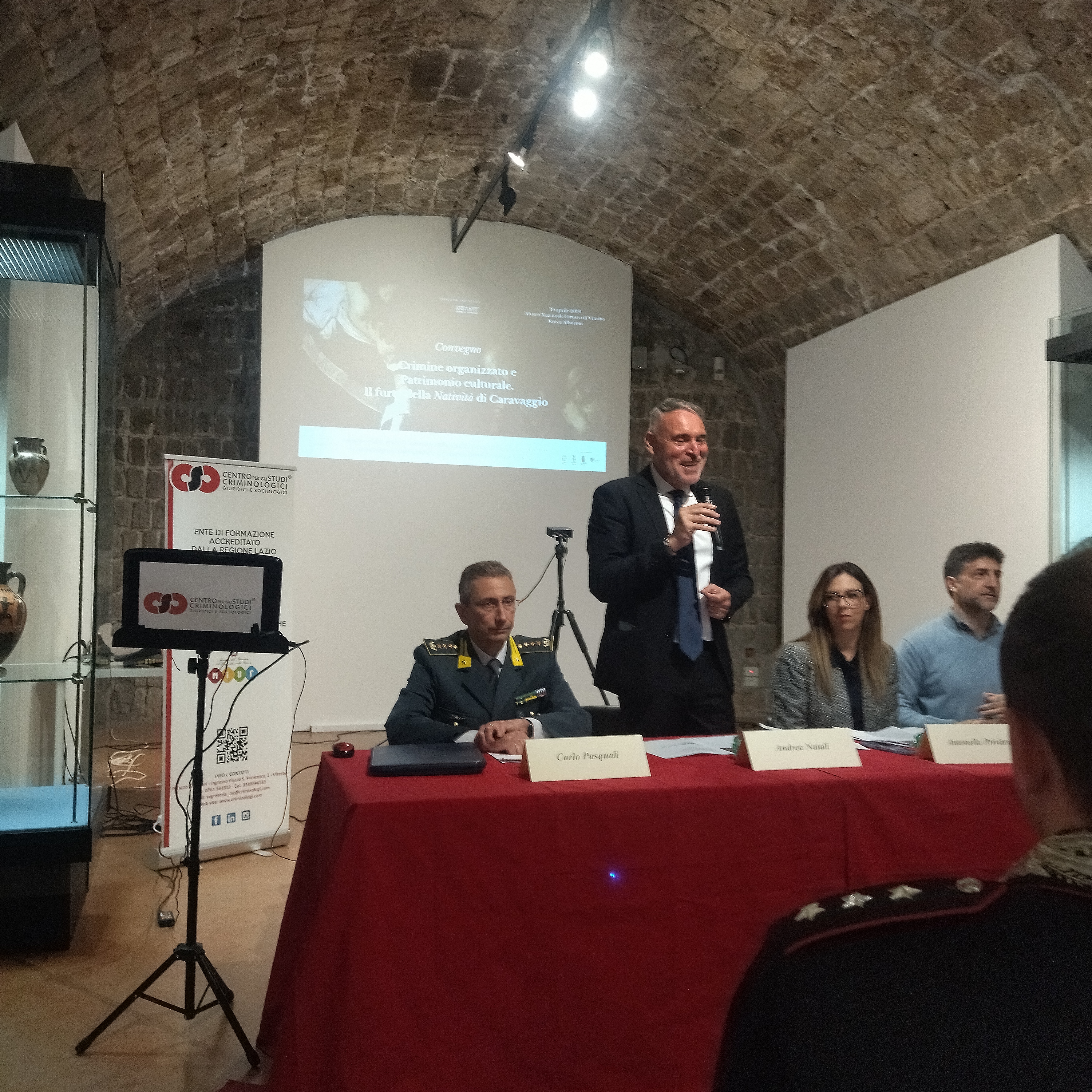
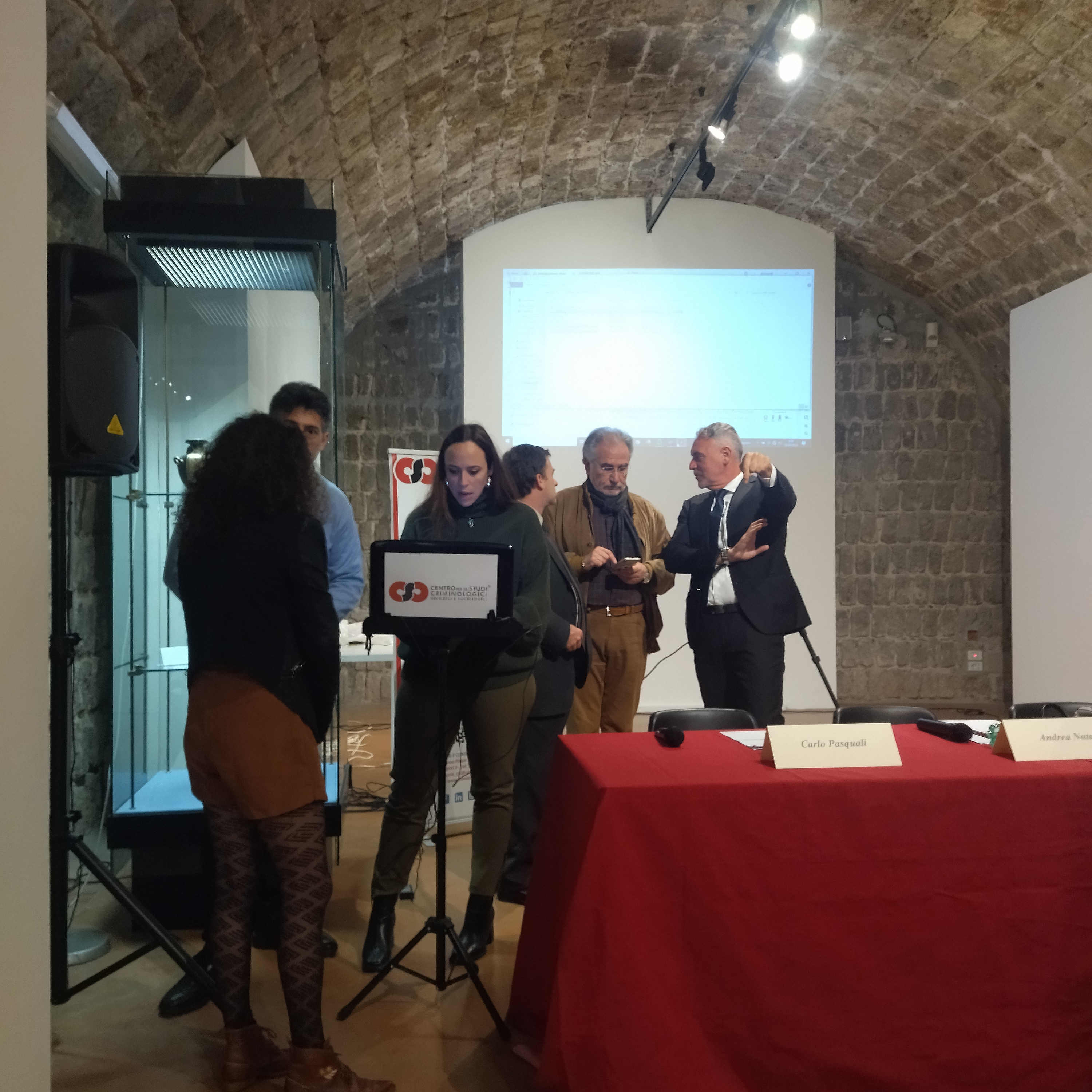
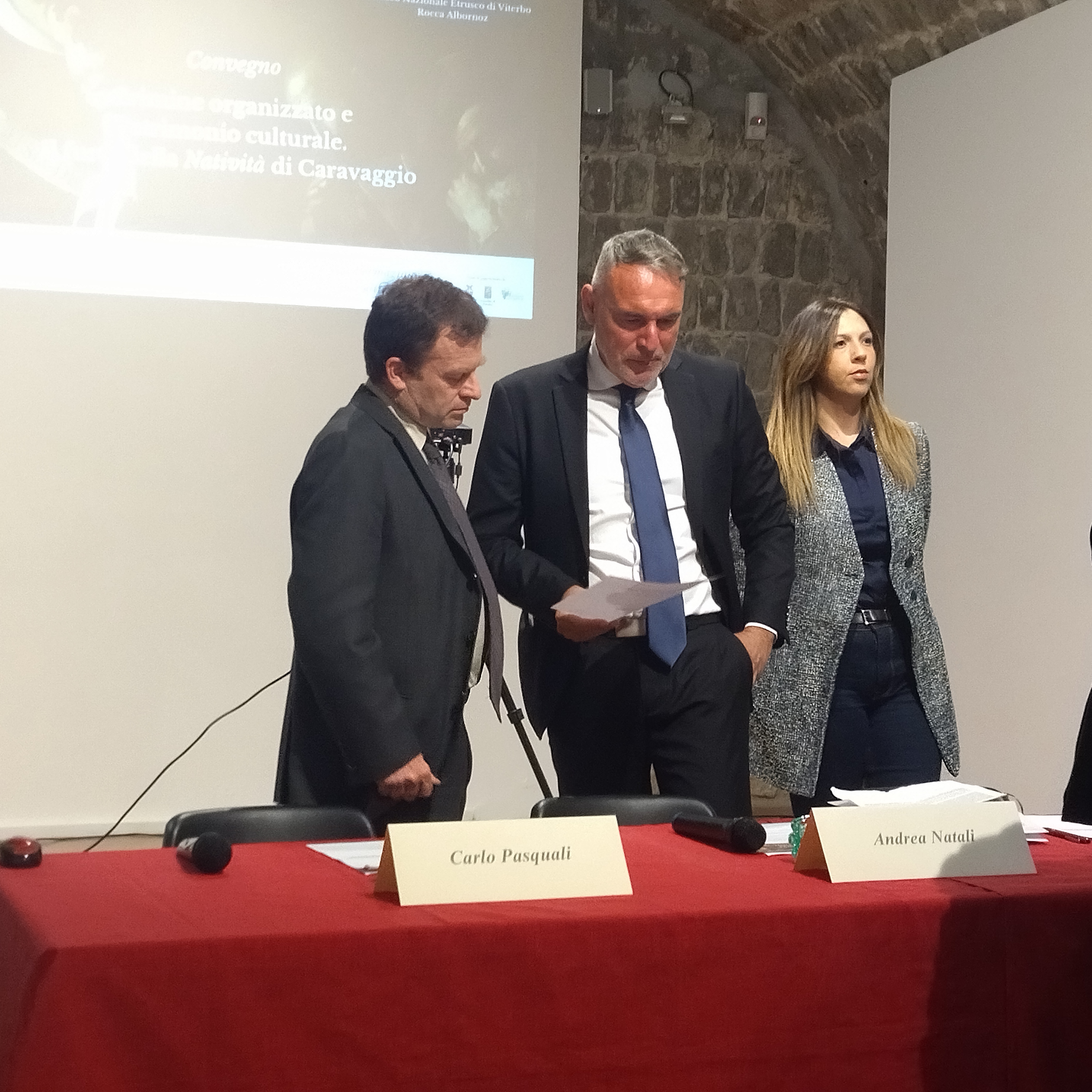
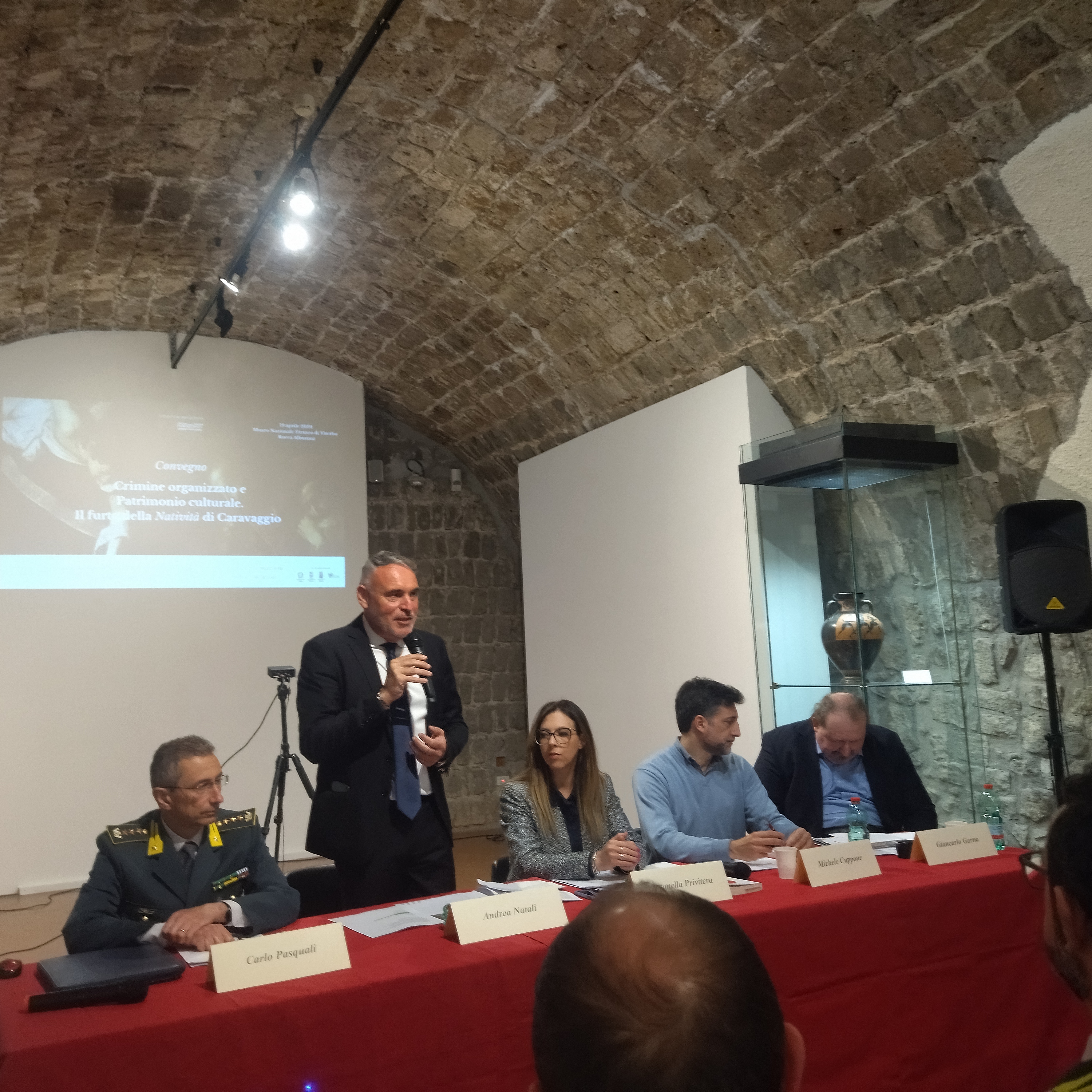
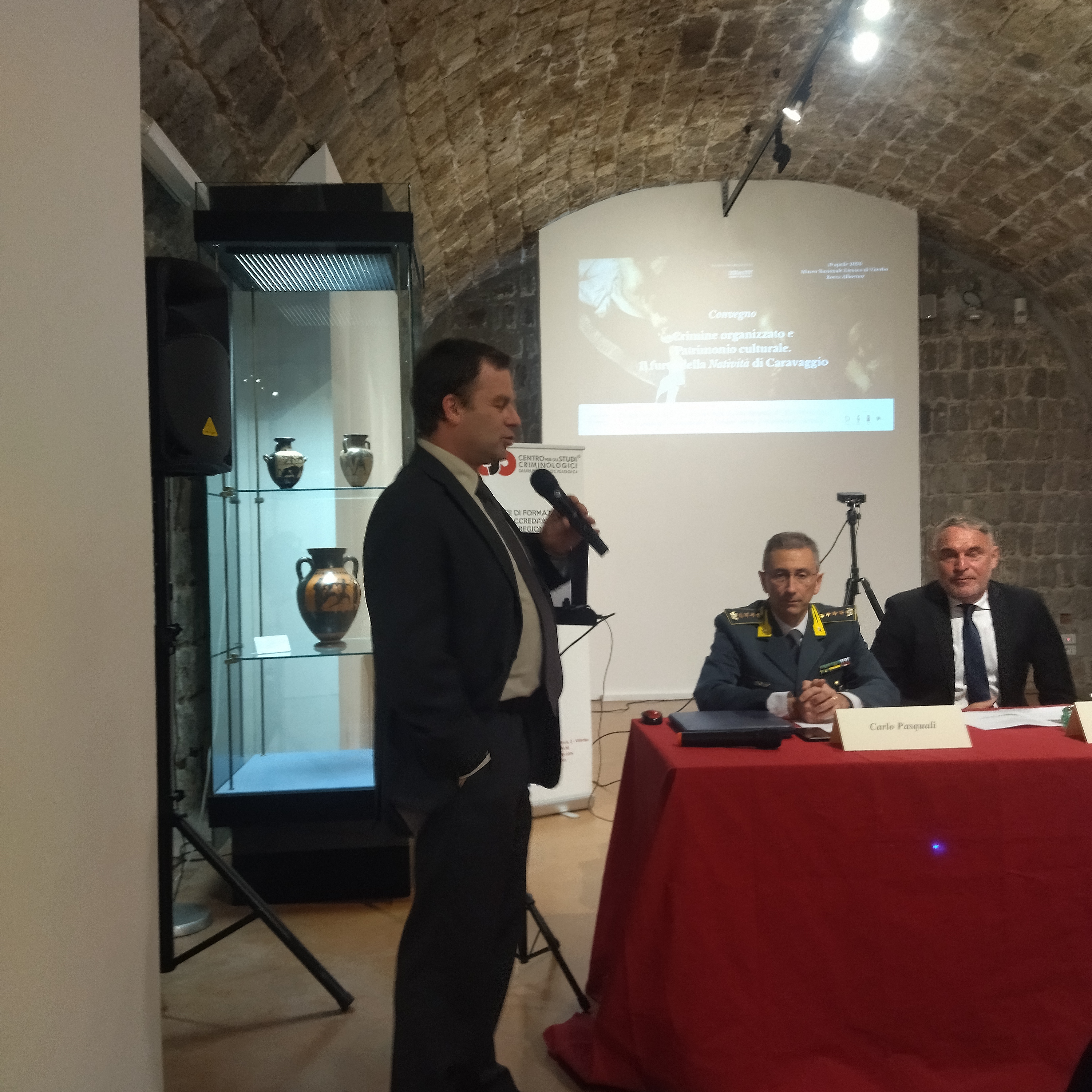
I lavori si sono aperti con i saluti istituzionali del dottor Andrea Natali che ha voluto evidenziare la duplice, importante, occasione rappresentata dal convegno, quella cioè di affiancare un argomento davvero rilevante con l’inaugurazione della quarta edizione della Scuola biennale di Alta Formazione in Archeologia Giudiziaria (marchio registrato) e Crimini contro il Patrimonio culturale, di cui il dottor Natali è direttore.
L’intento della scuola, conosciuta con il termine SAG, è quello di fornire un’approfondita conoscenza delle dinamiche alla base dei crimini contro il patrimonio culturale.
I lavori sono continuati con l’intervento della dottoressa Maria Assunta Tarsetti, direttrice della Biblioteca Internazionale “Scripta Hic Sunt” del Centro per gli Studi Criminologici; questa interessante realtà è operativa dal 2014, quando tutto era iniziato grazie alla donazione Rebibbia, costituita da un nucleo di 1200 volumi scritti in tutte le lingue europee. Attualmente la Biblioteca si è notevolmente ampliata, riuscendo a contare circa 20.000 volumi ed è divenuta una Bibliomediateca, annoverando nelle sue collezioni, oltre a libri e periodici, anche dvd e cd. Molti nuovi acquisti riguardano testi di storia dell’arte, di archeologia e di carattere giuridico.
La parola è poi passata alla dottoressa Sara De Angelis, direttrice del Museo Nazionale Etrusco di Viterbo che ha ospitato il convegno; sono state spiegate le principali finalità di ogni istituzione museale che sono quelle di proteggere e salvaguardare i beni artistici.
In questo caso si tratta di beni archeologici portati a riparo dalle piaghe del territorio quali scavi abusivi e mercati illeciti; insieme alla SAG e al prezioso contributo della dottoressa Emanuela Cipriano (allieva della SAG-biennio 2022-2024), il museo sta svolgendo un interessante lavoro di studio e catalogazione di beni sequestrati ai privati e al mercato illecito, valendosi del suddetto contributo che la stessa ha potuto offrire nell'ambito delle attività svolte per Tirocinio Specialistico, promosso dalla Scuola Biennale.
Le moltissime opere, chiuse in scatoloni, devono essere indagate nella loro storia per riuscire a rivelarne l’identità attraverso un lavoro davvero non facile. L’intento della direttrice è quello di poterli mostrare al pubblico attraverso una mostra che, con ogni probabilità, si svolgerà a Settembre. Intanto abbiamo potuto ammirare alcuni splendidi pezzi della Collezione Cima Pisciotti, provenienti da Villa Giulia; dopo diversi disallestimenti sono giunti nei depositi del Museo Nazionale Etrusco di Viterbo.
Sono capolavori provenienti da tombe di altissimo livello localizzate in importanti siti etruschi come Vulci, Cerveteri e Tarquinia; basterà citare una magnifica Anfora Panatenaica, trofeo che veniva donato ai vincitori delle gare olimpiche dell’antichità, un tempo piena di olio ricavato dagli ulivi sacri di Atene.
La dottoressa Antonella Privitera, componente del Comitato Scientifico e docente SAG ha introdotto il caso studio protagonista del convegno e cioè il più importante delitto irrisolto della criminologia del patrimonio culturale italiano, rappresentato dal furto della Natività del Caravaggio avvenuto a Palermo nel 1969.
Si è evidenziato che il contesto storico che accomuna tutti i territori in cui si verificano questi crimini nasce dalla pericolosa combinazione di crisi politica e assenza di controllo: tutto questo favorisce lo sviluppo di corruzione e malavita. Negli anni Sessanta avviene la prima guerra di mafia e i furti di opere d’arte, insieme al fenomeno degli scavi archeologici illegali, rappresentano una vera emergenza nazionale; è forte, dunque, l’esigenza di costituire una forza di polizia specializzata.
Nello stesso anno del furto dello splendido Caravaggio avviene la nascita dei Carabinieri dediti alla tutela del patrimonio artistico, corpo costituito, inizialmente, da nuclei e poi divenuto comando. La mafia tra anni ’50 e ’70 è stata il principale attore di questi furti e della devastazione del patrimonio culturale nazionale; proprio la scelta del furto avvenuto a Palermo, quale protagonista del convegno, non è casuale in quanto questo evento pose, per la prima volta, l’attenzione sia nazionale che internazionale sulla presenza della mafia in questo settore.
La dottoressa Privitera ha continuato affermando che in una rivista sulla criminalità organizzata, edita nel 2019, il furto della Natività, sottratta dall’oratorio di San Lorenzo a Palermo, sia stato correlato ad un episodio di riciclaggio o a un tentativo di estorsione da parte della mafia.
Cosa nostra avrebbe intercettato l’opera dopo il furto o lo avrebbe commissionato a fini di riciclaggio di denaro, trasferendolo in Svizzera dove sarebbe stata intercettato e poi disperso. Altrimenti, intuito l’enorme valore, il furto sarebbe stato un atto strumentale per esercitare pressioni e ricatti verso lo Stato: quindi simbolo di potere estorsivo della mafia nei confronti delle autorità.
Il dibattito è continuato con l’intervento del primo relatore, il dottor Michele Cuppone, ricercatore, grande esperto del Caravaggio e autore del saggio “Caravaggio, la Natività di Palermo. Nascita e scomparsa di un capolavoro”.
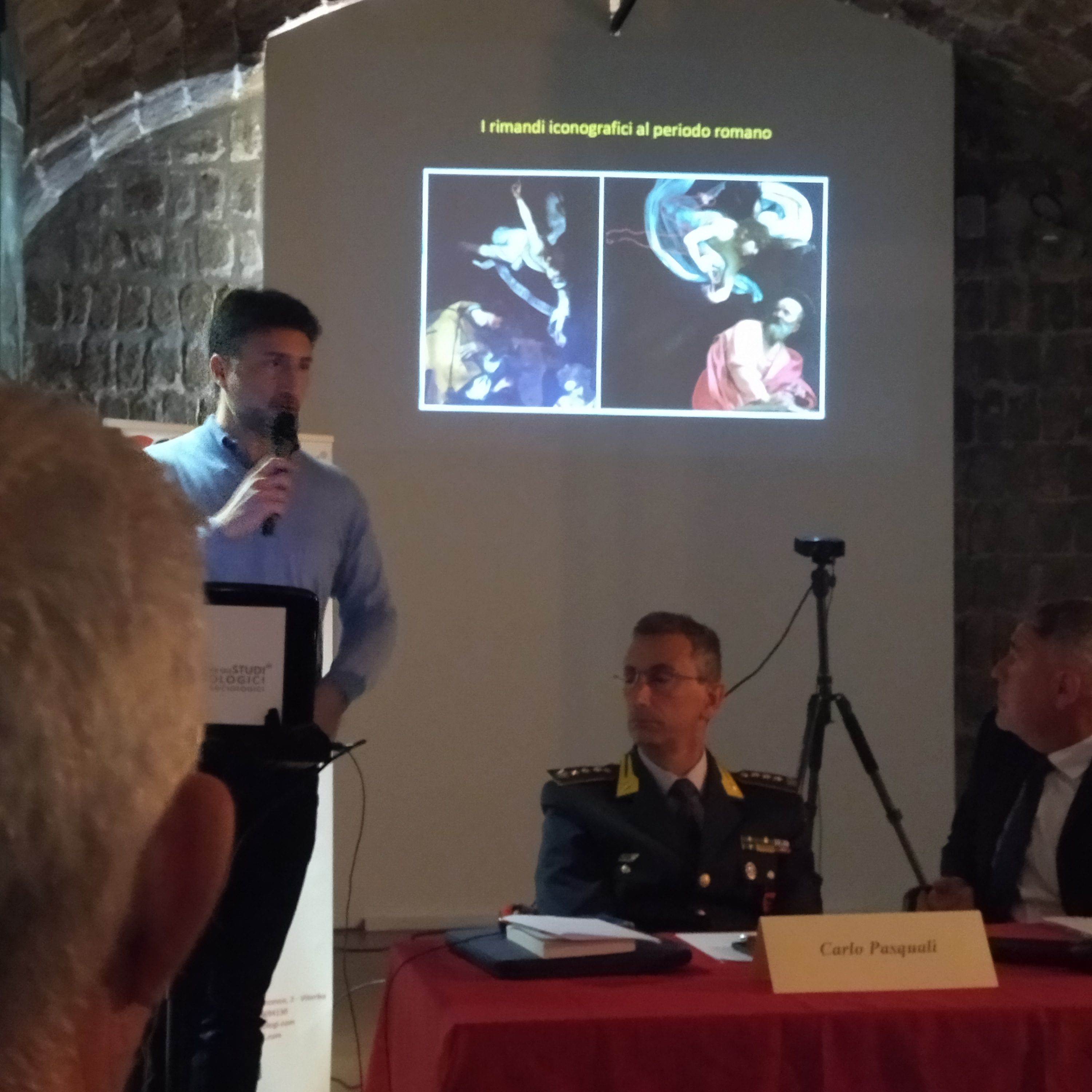
Il dottor Cuppone si è, soprattutto, soffermato sulla parte storico – artistica evidenziando che la Natività dovrebbe essere definita più precisamente come un’Adorazione del Bambino; inusuale è la presenza anacronistica di due santi che non avrebbero potuto presenziare alla nascita di Gesù e cioè San Lorenzo, raffigurato sulla sinistra con la dalmatica gialla, e San Francesco, in fondo sulla destra con le mani giunte. Vicino un pastore, l’angelo e naturalmente la Sacra Famiglia con San Giuseppe ritratto di spalle.
Si era pensato che Caravaggio avesse dipinto l’opera a Palermo; il grande artista arriva a Roma poco più che ventenne e riscuote un grande successo, realizzando splendide pale d’altare. Parte poi verso Napoli, va a Malta dove evade dopo essere stato arrestato per tumulti; approda, dunque, in Sicilia e si reca a Siracusa e a Messina, passando secondo alcune fonti per Palermo.
È’ questo che tramanda il suo primo biografo non citando però la Natività; un secondo biografo, conoscendo l’opera presente a Palermo deduce che Caravaggio l’abbia dipinta nella città siciliana. Tale tesi inizia ad essere contraddetta già da fonti ottocentesche; il dottor Cuppone pone, poi, in risalto le differenze sostanziali tra la Natività e altre opere sicuramente realizzate dall’artista in Sicilia come il Seppellimento di Santa Lucia di Siracusa e la Resurrezione di Lazzaro di Messina.
Nelle opere autenticamente siciliane, dipinte tra il 1608 e il 1609, vi è un grande spazio vuoto e i personaggi risultano schiacciati in basso, mentre, nella Natività trafugata a Palermo i protagonisti della composizione sono raccolti intorno al Bambino e lo spazio è occupato, in gran parte, dall’angelo. Lo stile, la composizione e il tipo di pennellata, molto più sciolta e fluida nella Natività, sono nettamente differenti in queste opere.
Si è dunque dedotto che la tela del Caravaggio rubata a Palermo non fu realizzata nel 1609 nella città siciliana ma, piuttosto, venne dipinta a Roma nel 1600, all’interno di Palazzo Madama, attualmente sede del Senato; è stato inoltre rinvenuto un documento, datato 1600, nel quale l’artista si impegna con il banchiere Fabio Nuti a dipingere un quadro dai tratti iconografici molto simili alla Natività.
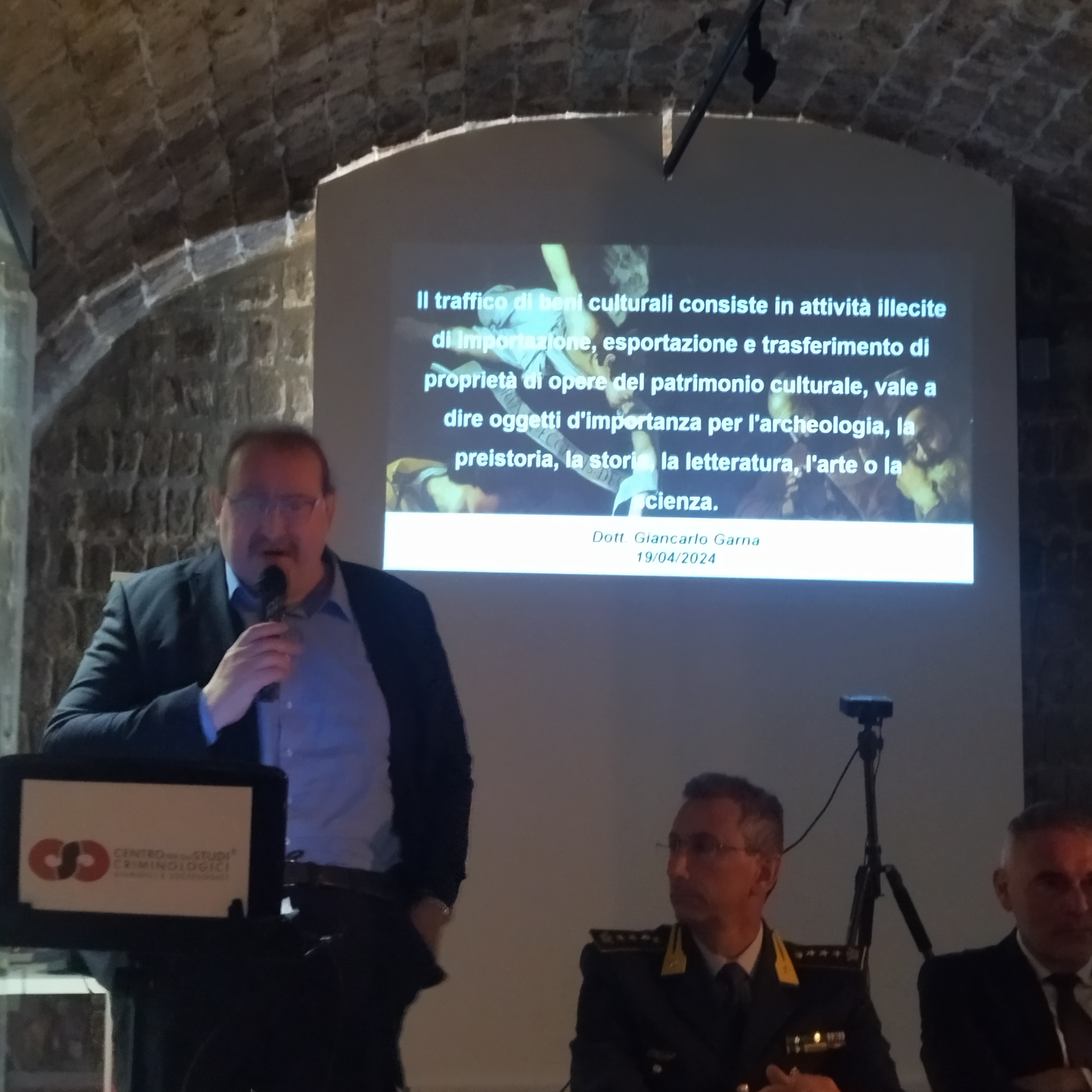
Il secondo relatore, il dottor Giancarlo Garna, archeologo e ricercatore, esperto di traffico illecito di beni culturali in aree di crisi e di guerra e docente nella Scuola biennale di Alta Formazione in Archeologia Giudiziaria (marchio registrato) e Crimini contro il Patrimonio Culturale, ha esposto l’interessante tema del traffico di beni culturali; quest’ultimo consiste in attività illecite di importazione ed esportazione del patrimonio culturale. Il dottor Garna ha giustamente evidenziato il fatto che i beni artistici non sono semplicemente degli oggetti ma sono beni immateriali, rappresentano la capacità, la mente di chi li ha realizzati, sono l’identità di un popolo. Bisogna combattere contro l’illegalità a favore proprio dell’identità culturale collettiva: non si tratta solamente di un traffico di oggetti ma di un crimine contro l’umanità.
Dove avviene tutto questo? L’Italia e la Grecia sono, spesso, i grandi paesi – fonte di tale traffico, ma sono anche paesi di mediazione, di commercio, di ripulitura. Il commercio proviene, anche, da luoghi in conflitto dove la popolazione è in gravi difficoltà da dover ricorrere al saccheggio o dove non è possibile difendersi. Questo non è un traffico di poco conto, infatti. circola di tutto: epigrafi, monete, lucerne, statuette, rilievi, pagine di libri, pagine di miniatura, mosaici.
È un traffico in cui chi scava è l’ultima ruota del carro; alla spalle vi è una filiera importante che utilizza gru, ruspe, squadre, corruzione. Dopo tutto questo gli oggetti entrano in Europa e devono essere immagazzinati, restaurati, valutati, ripuliti per poi essere rimessi in vendita. Si tratta di un traffico internazionale gestito dalla grande criminalità organizzata e dal terrorismo.
I lavori del convegno si sono conclusi con l’intervento del terzo relatore, il Colonnello Carlo Pasquali, Comandante provinciale della Guardia di Finanza di Viterbo, il quale ha spiegato come si svolge il riciclaggio di denaro da parte della criminalità organizzata, denaro proveniente dal traffico illecito dei beni artistici.
ENGLISH
Organized crime and cultural heritage: the theft of Caravaggio's Nativity
The conference entitled Organized Crime and Cultural Heritage: the theft of Caravaggio's Nativity took place on Friday 19 April at the National Etruscan Museum of Viterbo, inside the Rocca Albornoz. The works opened with the institutional greetings of Dr. Andrea Natali who wanted to highlight the double, important opportunity represented by the conference, that is to combine a truly relevant topic with the inauguration of the third edition of the biennial School of Higher Education in Archeology Judicial and Crimes against Cultural Heritage, of which Dr. Natali is director. The aim of the school, known by the term SAG, is to provide an in-depth knowledge of the dynamics underlying crimes against cultural heritage.
The work continued with the intervention of Dr. Maria Assunta Tarsetti, director of the “Scripta Hic Sunt” International Library of the Center for Criminological Studies; this interesting reality has been operational since 2014, when it all began thanks to the Rebibbia donation, consisting of a nucleus of 1200 volumes written in all European languages. Currently the Library has significantly expanded, managing to count around 20,000 volumes and has become a Library and Media Library, including in its collections, in addition to books and periodicals, also DVDs and CDs. Many new purchases concern art history, archeology and legal texts.
The word then passed to Dr. Sara De Angelis, director of the National Etruscan Museum of Viterbo which hosted the conference; the main purposes of each museum institution were explained, which are to protect and safeguard artistic assets. In this case we are talking about archaeological assets brought to shelter from the plagues of the area such as illegal excavations and illicit markets; together with the SAG and the precious contribution of Dr. Antonella Privitera, member of the Scientific Committee and teacher at the School of Higher Judicial Training, the museum is carrying out an interesting work of study and cataloging of assets seized from private individuals and from the illicit market.
The many works, closed in boxes, must be investigated into their history in order to reveal their identity through a truly difficult job. The director's intent is to be able to show them to the public through an exhibition which, in all likelihood, will take place in September. Meanwhile we were able to admire some splendid pieces from the Cima Pisciotti Collection, coming from Villa Giulia; after several dismantlings they arrived in the warehouses of the National Etruscan Museum of Viterbo.
They are masterpieces coming from very high-level tombs located in important Etruscan sites such as Vulci, Cerveteri and Tarquinia; it will be enough to mention a magnificent Panathenaic Amphora, a trophy that was given to the winners of the Olympic competitions of antiquity, once filled with oil obtained from the sacred olive trees of Athens.
Dr. Privitera then introduced the case study which was the protagonist of the conference, namely the most important unsolved crime in the criminology of the Italian cultural heritage, represented by the theft of the Nativity by Caravaggio which took place in Palermo in 1969. It was highlighted that the historical context which unites all territories in which these crimes occur arises from the dangerous combination of political crisis and lack of control: all this favors the development of corruption and crime.
The first mafia war took place in the 1960s and the theft of works of art, together with the phenomenon of illegal archaeological excavations, represented a true national emergency; There is therefore a strong need to establish a specialized police force.
In the same year as the theft of the splendid Caravaggio, the Carabinieri dedicated to the protection of the artistic heritage was born, a body initially made up of nuclei and then becoming a command. Between the 1950s and 1970s, the mafia was the main actor in these thefts and in the devastation of the national cultural heritage; precisely the choice of the theft which occurred in Palermo as the protagonist of the conference is not accidental as this event brought, for the first time, both national and international attention to the presence of the mafia in this sector.
Dr. Privitera continued by stating that in a magazine on organized crime, published in 2019, the theft of the Nativity, stolen from the oratory of San Lorenzo in Palermo, was related to an episode of money laundering or an extortion attempt by the mafia . Cosa Nostra would have intercepted the work after the theft or would have commissioned it for money laundering purposes, transferring it to Switzerland where it would have been intercepted and then dispersed. Otherwise, having understood the enormous value, the theft would have been an instrumental act to exert pressure and blackmail towards the State: therefore a symbol of the mafia's extortion power towards the authorities.
The debate continued with the intervention of the first speaker, Dr. Michele Cuppone, researcher, great expert on Caravaggio and author of the essay "Caravaggio, the Nativity of Palermo. Birth and disappearance of a masterpiece”. Dr. Cuppone, above all, focused on the historical-artistic part, highlighting that the Nativity should be defined more precisely as an Adoration of the Child; unusual is the anachronistic presence of two saints who could not have been present at the birth of Jesus, namely San Lorenzo, depicted on the left with the yellow dalmatic, and San Francesco, at the back on the right with his hands clasped. Nearby a shepherd, the angel and of course the Holy Family with Saint Joseph portrayed from behind.
It was thought that Caravaggio painted the work in Palermo; the great artist arrived in Rome in his early twenties and enjoyed great success, creating splendid altarpieces. He then leaves for Naples, goes to Malta where he escapes after being arrested for riots; he therefore landed in Sicily and went to Syracuse and Messina, passing through Palermo according to some sources.
This is what his first biographer handed down, but did not mention the Nativity; a second biographer, knowing the work present in Palermo, deduces that Caravaggio painted it in the Sicilian city. This thesis begins to be contradicted already by nineteenth-century sources; Doctor Cuppone then highlights the substantial differences between the Nativity and other works certainly created by the artist in Sicily such as the Burial of Saint Lucia of Syracuse and the Resurrection of Lazarus of Messina.
In the authentically Sicilian works, painted between 1608 and 1609, there is a large empty space and the characters are crushed at the bottom, while, in the Nativity stolen from Palermo the protagonists of the composition are gathered around the Child and the space is occupied, largely part, from the angel. The style, composition and type of brushwork, much looser and more fluid in the Nativity, are clearly different in these works.
It has therefore been deduced that the Caravaggio canvas stolen in Palermo was not painted in 1609 in the Sicilian city but, rather, was painted in Rome in 1600, inside Palazzo Madama, currently the seat of the Senate; a document was also found, dated 1600, in which the artist agreed with the banker Fabio Nuti to paint a picture with iconographic features very similar to the Nativity.
The second speaker, Dr. Giancarlo Garna, archaeologist and researcher, expert in illicit trafficking of cultural goods in areas of crisis and war and teacher at the two-year School of Higher Education in Judicial Archeology and Crimes against Cultural Heritage, presented the interesting issue of trafficking in cultural goods; the latter consists of illicit activities of import and export of cultural heritage.
Dr. Garna rightly highlighted the fact that artistic assets are not simply objects but are intangible assets, they represent the ability, the mind of those who created them, they are the identity of a people. We must fight against illegality in favor of the collective cultural identity: it is not just a trafficking of objects but a crime against humanity.
Where does all this happen? Italy and Greece are often the large countries - the source of this traffic, but they are also countries of mediation, of trade, of cleansing. Trade also comes from places in conflict where the population is in serious difficulty and has to resort to looting or where it is not possible to defend themselves. This is not insignificant traffic, in fact. everything circulates: epigraphs, coins, lamps, statuettes, reliefs, book pages, miniature pages, mosaics. It is a traffic in which whoever digs is the last wheel of the wagon; behind it there is an important supply chain that uses cranes, bulldozers, teams and corruption. After all this, the objects enter Europe and must be stored, restored, evaluated, cleaned and then put back on sale. This is an international trafficking managed by large organized crime and terrorism.
The work of the conference concluded with the intervention of the third speaker, Colonel Carlo Pasquali, provincial commander of the Guardia di Finanza of Viterbo, who explained how money laundering by organized crime takes place, money coming from trafficking illicit act of artistic property.